< Back
with SPAD powered vTAU camera
The complete high-speed recording solution
High-speed camera for fluorescence imaging
Intensified high-speed camera
Intensified camera with ultra-short gating
High-speed Intensified Camera Attachment
Compact lens-coupled image intensifier
Intensifier Control
Unit for Automated Systems
Record and edit high-speed videos with one or multiple cameras.
Record and analyze fluorescence lifetime images.
Custom imaging products, sensors and software for low light level applications.

LIFA FLIM System

with SPAD powered vTAU camera

LIFA FLIM

VERSATILE

available in Widefield, Spinning-disk confocal, and TIRF configurations as well as Spectral and SPIM

AFFORDABLE

a cost-effective way of doing quantitative FLIM

COMPATABLE

LIFA is compatible with every type of fluorescence microscope with a camera output

Description

The Lambert Instruments LIFA FLIM system is the fastest and easiest way to perform Fluorescence Lifetime Imaging Microscopy (FLIM).

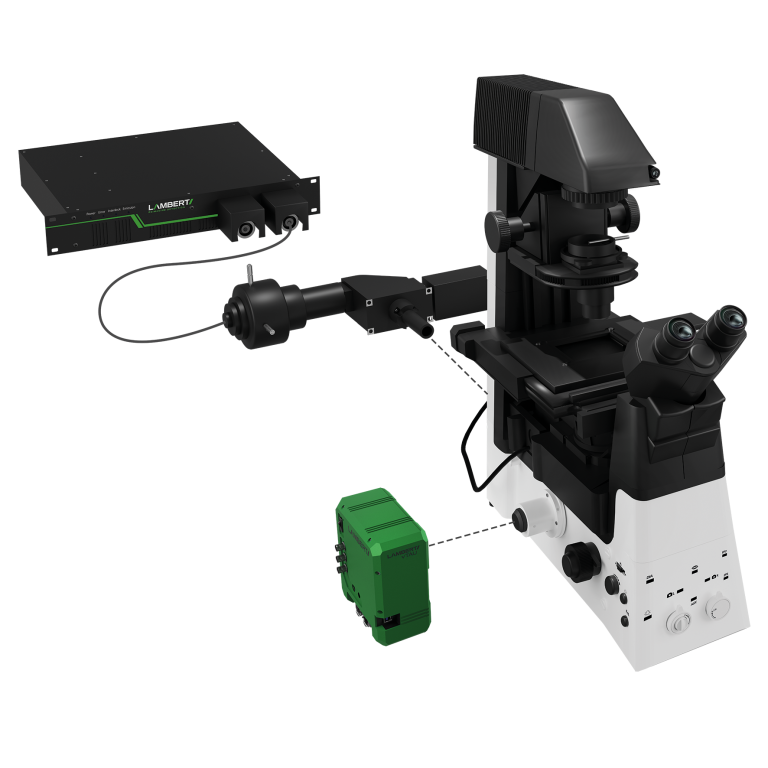
Available in versatile configurations dependent on your specific applications, the LIFA system offers a turn-key solution for fluorescence lifetime imaging microscopy. Compatible with any fluorescence microscope with a camera output – including microscopes by Leica, Nikon, Olympus, TILL and Zeiss. Set up is quick and easy, with all hardware integrated seamlessly with our dedicated LIFA software, so you can focus on your experiment.

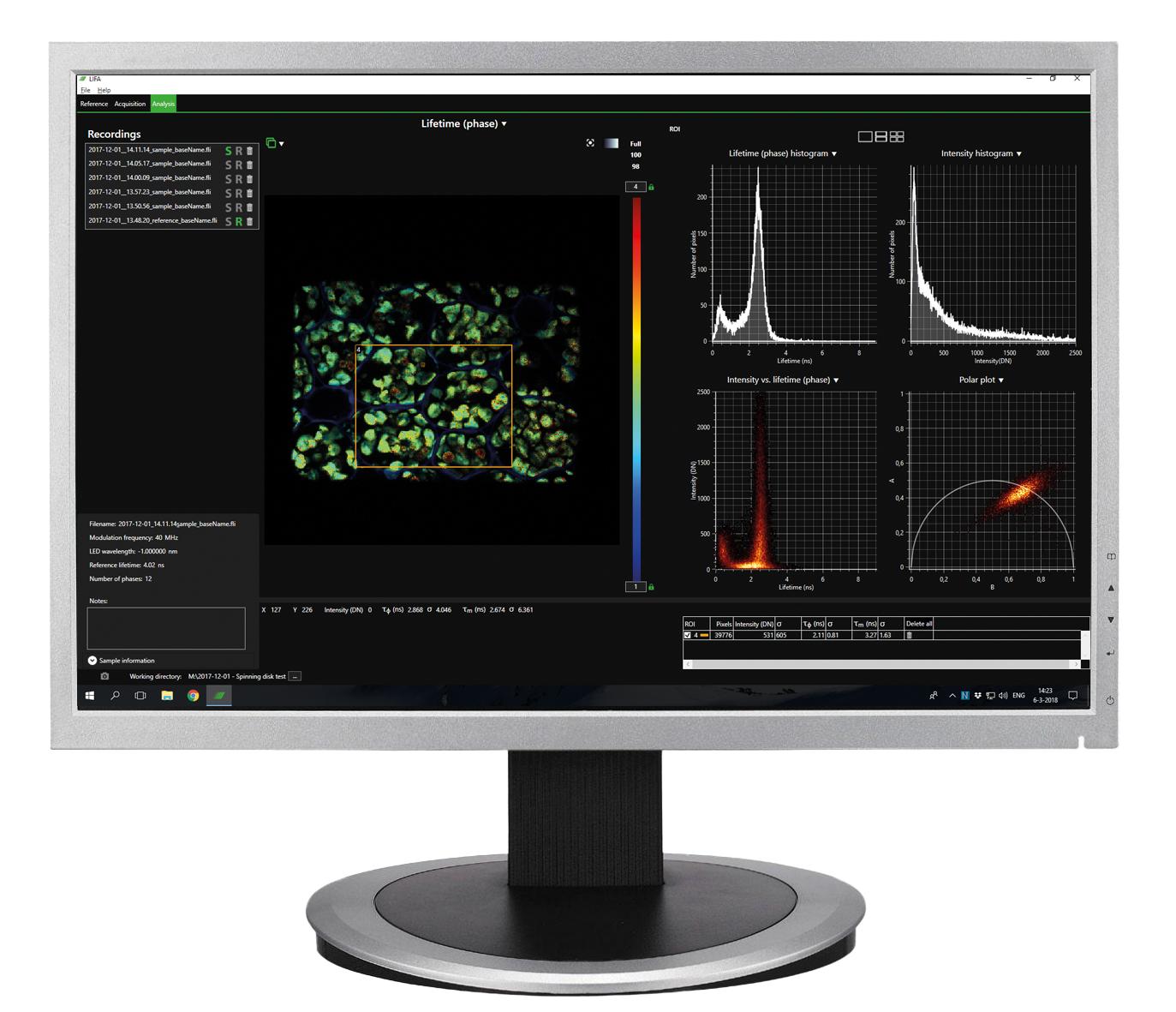
The advanced software instantly analyses data and presents the calculated fluorescence lifetimes visually. Recorded images are compatible with ImageJ, FIJI, Matlab and MetaMorph, while detailed statisitcal data can be exported to an Excel worksheet.

Read more about LIFA software.

Features

Experiments from start to finish
From recording images to lifetime calculation and data analysis

Dedicated LIFA software
Using our stand-alone LIFA Software, you can instantly calculate the fluorescence lifetime and presents it as a colour coded overlay and a phaser plot. 

Comprehensive SDK
Our software development kit (SDK) provides a flexible platform for integrating and automating experiments, offering you full control and customization of your fluorescence lifetime measurements.

Broad Lifetime Range
From sub microsecond down to picoseconds

Multiple configurations
System components to suit your applications

Non-phototoxic illumination


Applications

Bacteria research

B. subtilis cells where GFP-tagRFP fluorophores are linked are mixed in a 1:1 ratio with B. subtilis cells where the GFP-tagRFP fluorophores are cleaved apart; resulting in a mix of cells with either short GFP fluorescence lifetime due to quenching by tagRFP or long GFP fluorescence lifetime.

Image courtesy of the University of Groningen.

High-throughput screening

Researchers at the University of Amsterdam developed a multi-position fluorescence lifetime imaging (FLIM) screening method to screen for bright FPs. However, this method can be applied to any experiment in which the fluorescence lifetime is an important parameter.

Image courtesy of the University of Amsterdam.

Live-cell Imaging

Track how the lifetimes in your sample change over time with the built-in time-lapse feature. Just set the duration and time between measurements and our software does the rest.

This video shows a time-lapse of HeLa cells. After 150 seconds isoproterenol is added, which results in a rapid increase of cAMP and a corresponding increase in fluorescence lifetime. This is followed by cAMP decomposition and a steady decrease in fluorescence lifetime.

FLIM data courtesy of the Netherlands Cancer Institute.

LIFA vTAU

SPAD powered FLIM system

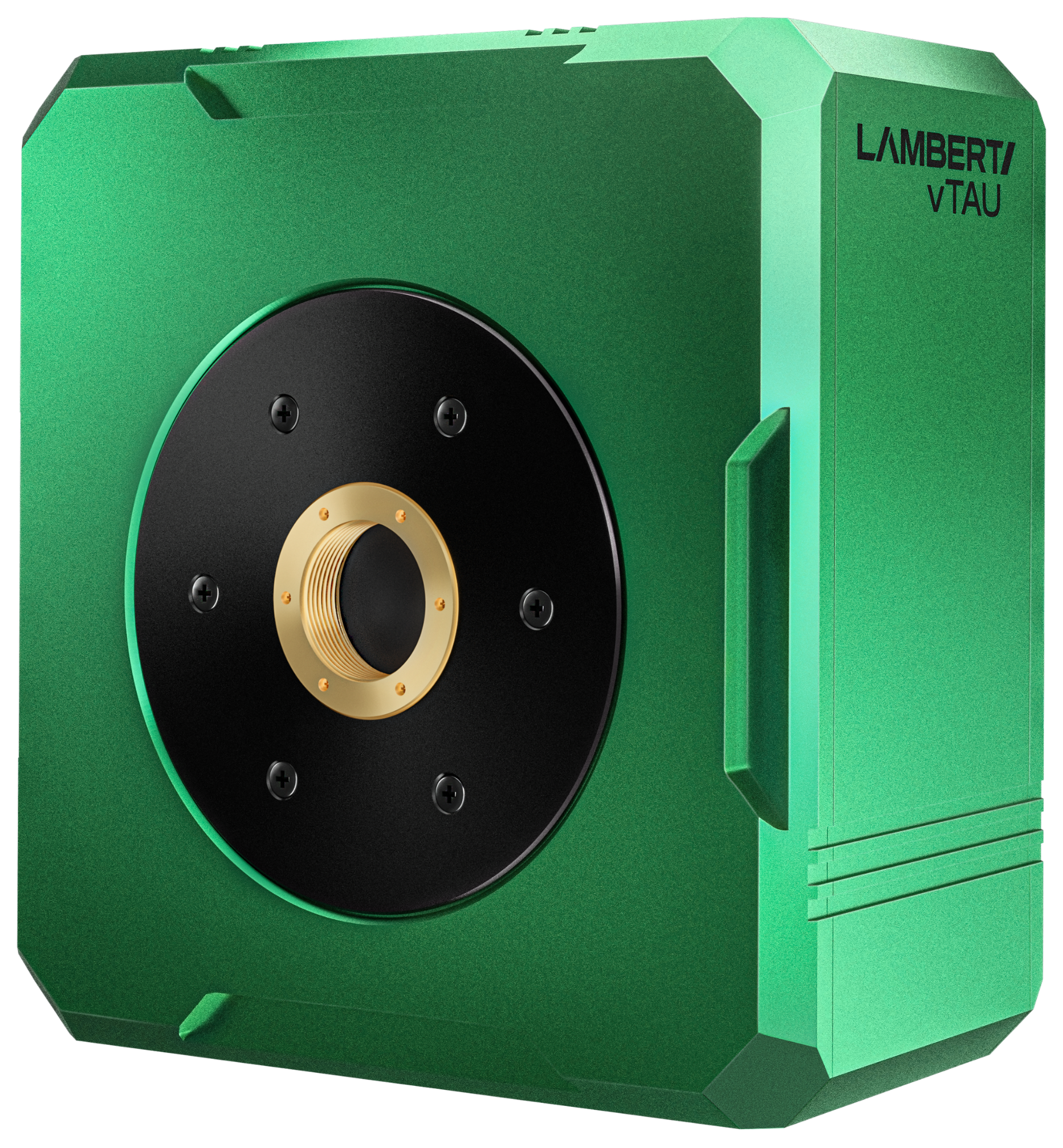
Simplify experiments for researchers and imaging centres with the vTAU SPAD camera; combining excellent light sensitivity with easy image acquisition and data analysis.

Minimise measurement duration, automate image acquisition, and simplify data analysis… factors of great importance for cell biology, cancer research and high-throughput screening.

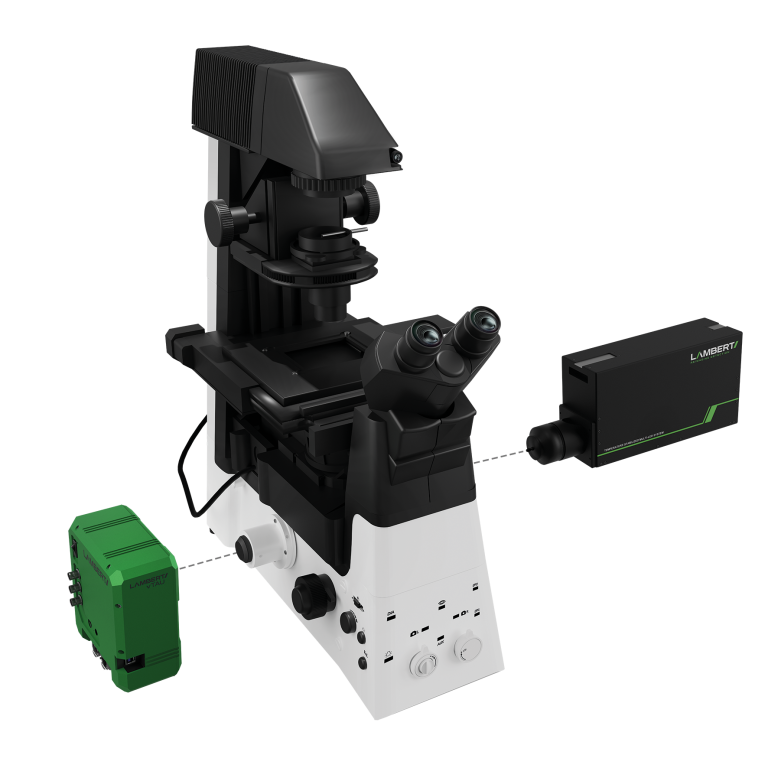
vTAU easily integrates into any FLIM system, providing a plug-n-play experience that allows for seamless switching between setups.

Key features

Unique image sensor

Ultra-high sensitive SPAD detector for up to 74 FLIM images per second

Multiple image modes

Including regular Frequency-Domain FLIM acquisition and Time-Lapse recordings

Characteristics

Pixel resolution: 512 x 512 px

Pixel size: 16 μm

Lifetime range: 0.2 to 300ns

Frame rate: up to 370 fps

Sensor type: SPAD

Downloads

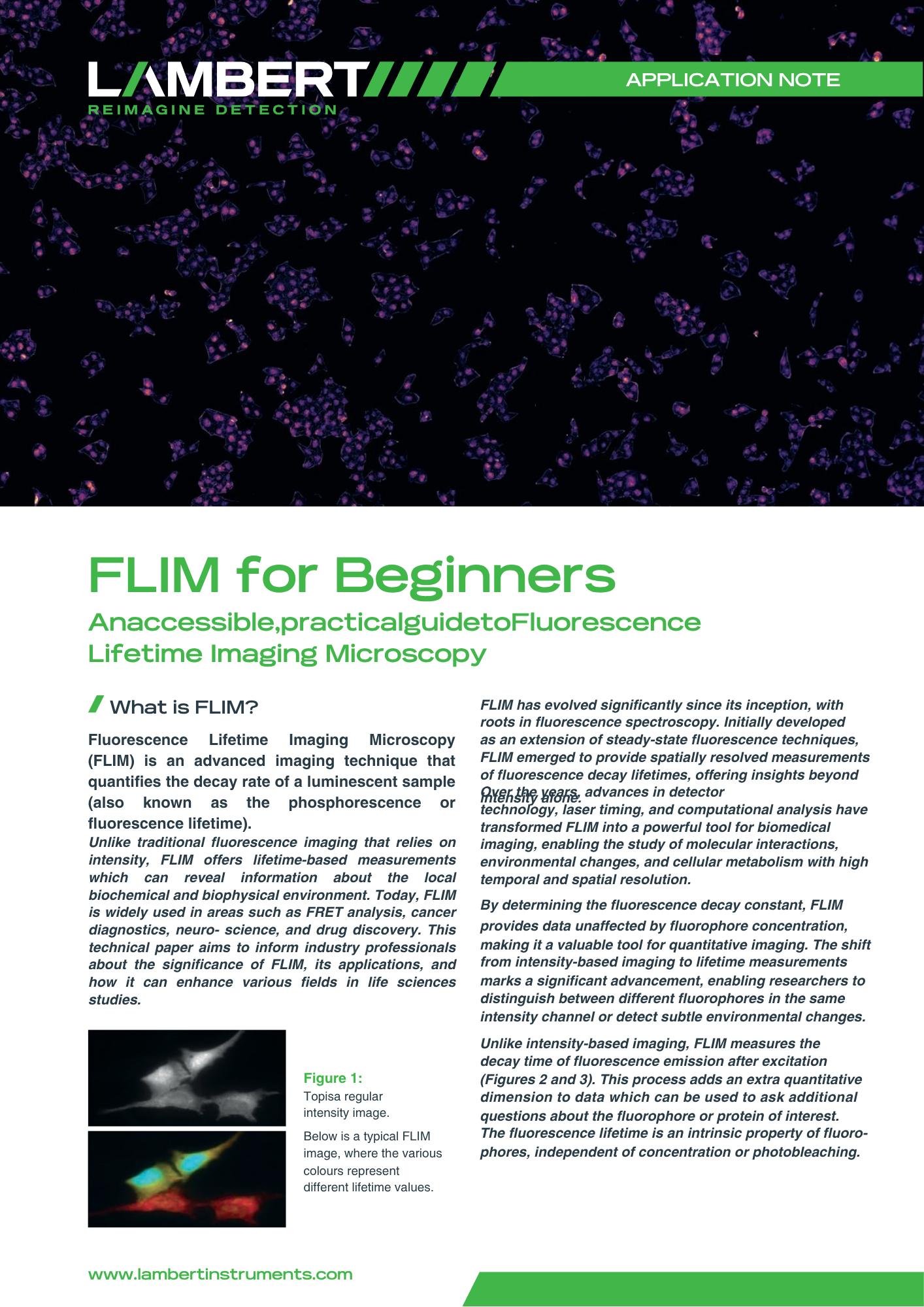
FLIM for Beginners Application Note

Unlock a new dimension in fluorescence imaging with FLIM for Beginners. Unlike intensity-based methods, FLIM measures fluorescence decay—revealing insights into biochemical and biophysical environments. This guide covers the fundamentals, the two main approaches (Time and Frequency Domain), and Phasor Analysis, plus key applications like metabolic imaging, protein interactions, and fluorophore unmixing.

Download it to strengthen your FLIM knowledge and enhance research in cancer, neuroscience, and drug discovery.

System Components

The LIFA vTAU system includes:

Dedicated LIFA Software

Light source(s) according to your application

Computer with USB and HDMI connection

On-site system installation (optional)

1 day of hands-on training (optional)

Phone, email and remote desktop support

LIFA Software

Seamless integration of hardware for full system control

Guides user through FLIM experiments from start to finish.

Supports third-party hardware for a flexible and expandable system.

Time-lapse capabilities for extended experiments.

Data export for seamless analysis and sharing.

Triggered recording for precise data capture.

SDK and API available for custom integrations.

Light Sources

Multi-LED and/or Multi-LASER as required for your set up

Excitation light sources for frequency-domain fluorescence lifetime imaging, supplied according to your required wavelengths.  

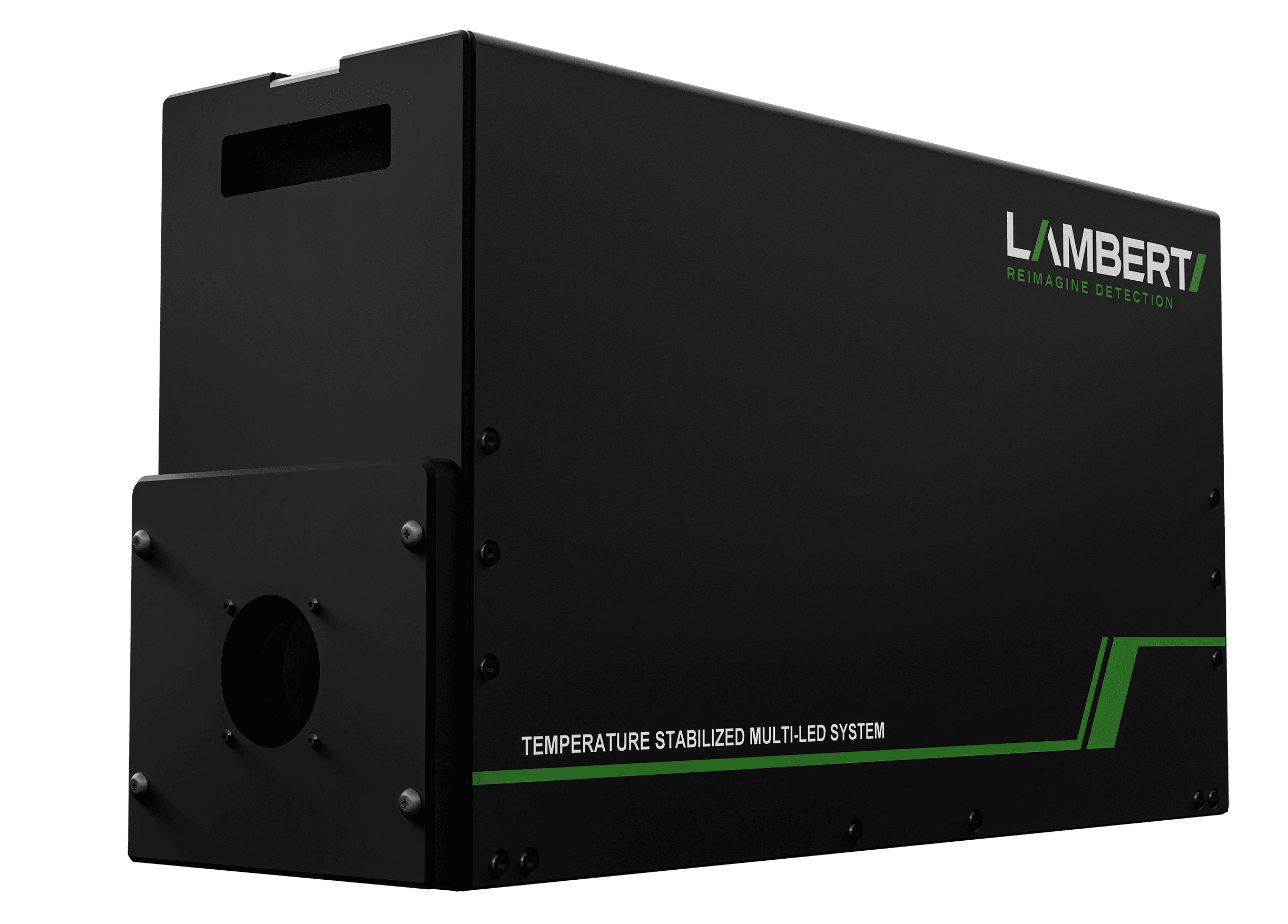
For widefield illumination, we provide multi-LED solutions.

For laser illumination, we offer multi-LASER options with single-mode, multi-mode, and liquid light guide configurations.

Multi-LED systems can also be provided with a liquid light guide.

OEM Solution

We offer an OEM platform based on the proven Lambert Instruments LIFA system

Designed for system integrators who need a camera-based FLIM solution with short time to market.

Our solution is compact, high-speed, and easy to integrate, giving you the flexibility to embed FLIM capabilities into your microscopy systems without compromise.

High temporal resolution delivers fast and accurate lifetime imaging.

Configurations

Widefield

On widefield microscopes, the vTAU camera in combination with the Multi-LED offers a capable yet compact FLIM solution. The vTAU is compatible with the camera port of widefield microscopes and the Multi-LED is compatible with the standard epifluorescence port of widefield microscopes.

Spinning-disk confocal

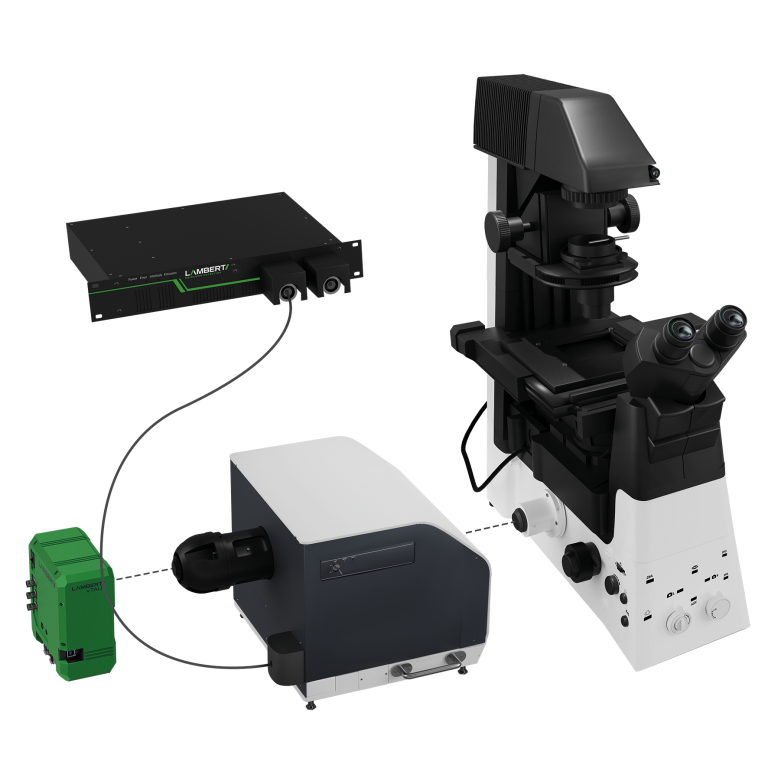
Being a camera-based system, the Lambert Instruments LIFA vTAU system for frequency-domain FLIM is compatible with multi-beam confocal microscopy techniques, most notably the Yokogawa CSU spinning disk series (based on the Nipkow disk scanner), Andor Dragonfly, Crest V3/V2/Cicero, and the VTInfinity series by Visitech International.

TIRF

Total Internal Reflection Fluorescence (TIRF) microscopy facilitates extremely high-contrast visualization and thereby high sensitivity of fluorescence near the cover glass. Typically, the optical section adjacent to the cover glass is about 100 nm. The unique combination of TIRF and frequency-domain FLIM makes it possible to measure lifetimes of, for instance, membrane receptors in order to identify their signalisation pathway. 

Request More Information

    Lambert Instruments BV

    Leonard Springerlaan 19
    9727 KB Groningen
    The Netherlands

    User Publications

    Researchers around the world use the LIFA in their studies. Opposite is an overview of the most recent publications describing research that was done using a LIFA.

    For a complete overview of applications, please visit our applications pages and our selected LIFA publications on the Lambert main site for more information.

    Featured LIFA users

    Frequently Asked Questions

    Fluorescence Lifetime Imaging Microscopy (FLIM) is a technique that measures the decay time of fluorescence molecules, so-called fluorophores. FLIM provides detailed information about molecular environments, energy transfer between fluorophores and protein interactions. It is widely used in biological and biomedical research to study dynamic processes and cellular microenvironments.

    Frequency-domain Fluorescence Lifetime Imaging Microscopy (FLIM) is a technique used to measure the fluorescence lifetimes of fluorophores by modulating the excitation light at different frequencies. In this method, the phase shift and modulation depth of the emitted light relative to the excitation source are measured, which provides information about the fluorescence lifetime. This technique is valuable for studying molecular interactions, environment-sensitive probes, and cellular dynamics. FLIM is commonly used in biological and biomedical imaging, to sense the cellular environment, get a better understanding of cell biology or to differentiate between fluorophores based on their lifetimes if they have similar emission spectra.

    Time-domain Fluorescence Lifetime Imaging Microscopy (FLIM) is a technique that measures the fluorescence lifetime of molecules by exciting fluorophores with a very short pulse of light and then detecting the time it takes for them to emit photons. The emitted light’s intensity decays over time, and this decay curve is analyzed to determine the fluorescence lifetime.

    The primary difference between frequency-domain and time-domain FLIM lies in how the fluorescence lifetime is measured:

    • Frequency-domain FLIM: Modulates the excitation light at specific frequencies and measures the phase shift and modulation of the emitted light relative to the excitation. It determines lifetime from these shifts.
    • Time-domain FLIM: Uses short light pulses to excite fluorophores and measures the time delay between the excitation pulse and the emitted photons. The fluorescence decay curve is analyzed to determine lifetime.

    Both techniques provide insights into molecular environments but differ in how they capture fluorescence data.


    Widefield microscopy is an imaging technique used in biological and clinical research to capture images of entire specimens or large sections of tissue. It involves illuminating the entire field of view at once with light, typically from a broad light source, such as a lamp or LED. All parts of the sample are illuminated simultaneously, allowing for the detection of light emitted or reflected from the entire specimen. This method is commonly used for fluorescence microscopy, enabling researchers to observe labeled structures in live or fixed cells.

    SPAD (Single-Photon Avalanche Diode) detector technology is used to detect individual photons with extremely high sensitivity and precision. SPADs operate in “Geiger mode,” where a single photon triggers an avalanche of charge carriers, resulting in a detectable electrical pulse. This allows for the precise detection of very low light levels, making SPAD detectors ideal for applications like fluorescence lifetime imaging microscopy (FLIM), quantum cryptography, time-of-flight measurements, and biomedical imaging. SPADs offer fast response times and high photon detection efficiency, enabling high-resolution and accurate photon counting.

    Spinning-disk confocal microscopy is an advanced imaging technique used for capturing high-resolution images of biological samples in real-time. It employs a rotating disk with multiple pinholes to focus light onto specific areas of the sample while rejecting out-of-focus light. This enables faster image acquisition compared to traditional laser-scanning confocal microscopy. Spinning-disk confocal is ideal for live-cell imaging due to its speed, lower phototoxicity, and reduced photobleaching, making it suitable for dynamic processes like cell movement or protein interactions.

    Light sheet microscopy, also known as Selective Plane Illumination Microscopy (SPIM), is a technique used to image large, three-dimensional biological samples with minimal phototoxicity and photobleaching. In this method, a thin sheet of light illuminates a single plane of the sample, while an orthogonal detection system captures high-resolution images. By moving the light sheet through the sample, researchers can reconstruct detailed 3D images of tissues, embryos, or entire organisms. This method is especially useful for long-term live imaging of biological processes in real-time.

    Total Internal Reflection Fluorescence (TIRF) microscopy is a technique used to observe events occurring near the surface of a cell, typically at or near the plasma membrane. TIRF systems use an evanescent wave generated by light undergoing total internal reflection at the interface between two media (e.g., glass and water) to selectively illuminate and excite fluorophores within a very thin region, typically less than 200 nm, adjacent to the surface. This minimizes background noise and allows high-contrast imaging of cellular processes like protein interactions at the cell membrane.

    Contact Us

    5th floor,
    Leonard Springerlaan 19
    9727KB Groningen
    The Netherlands

    Phone:
    +31 (0) 50 501 8461
    Email:
    sales@lambertinstruments.com